Why Is It So Important to Purchase a Dog Crate?
Published By Eduard Spelber, 9 Feb 2026
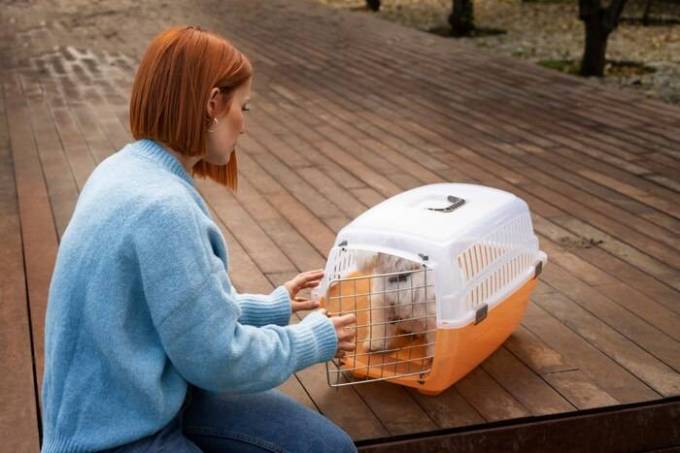
What more can be said about the special connection between men and dogs? Since the beginning of humanity, our canine friends have been our most trusted animal companions. We evolved together, we conquered the world together, and even now, tens of thousands of years after their ancestors first started to scoop around our campfires, dogs remain humanity’s best friends. There’s a reason after all why dogs are the most popular pets in Australia, and why no fewer than 7.4 million of them found a home in our households.
Smart, loyal, cute, active, and coming in a huge variety of breeds, dogs are no longer just simple animal companions. For many, they have transformed into genuine family members and they have a special place in our hearts. But let’s be honest for one second. The dog ownership process in our country is not always as straightforward as we would have hoped. Nor is it as cheap as we need. You love your small puppy and he loves you back. But oftentimes, his physical and behavioural development will be influenced by the decisions you make in his growing years, and of course, by the accessories you are willing to invest in.
Dogs don’t judge us. They are the perfect companions for individuals who need emotional stability in their everyday life, they form long-lasting connections with their handlers, they are protective of us, and for many, they can be the support we need in order to continue our day-to-day activities with a smile on our faces. But we are responsible for their well-being, and we want to keep them safe. So, in some instances, we might be forced to purchase some accessories that we didn’t previously think were necessary for their safety. For example: a dog crate.
Why Get a Dog Crate?
The simplest of answers is often the correct one: Safety. Nobody likes to know their pup restricted in the confinement of a plastic or metal-based dog crate. But oftentimes, it’s for their own good. The purchase of a high-quality puppy crate is necessary if you are planning to travel with your dog or if you are looking at ways to instil some discipline into your pet and train away some unwanted behavioural elements that make the pet ownership process more difficult for your family. Our methods of long-distance transportation are not designed for the ergonomics of our dogs.

Your pup might look surprisingly sturdy. But how exactly will he be protected in case of a small car accident or plane turbulence? A dog crate will keep your pup secure, regardless of what’s happening outside, and it can also serve as a safe space in which he can relax when travelling or staying in new and unfamiliar places. Dogs don’t necessarily see crates as a restrictive space. Oftentimes, it’s actually the opposite.
For your small pup, a dog crate can be a den, in which he can flee anxiety, and thus escape behavioural traits that are not compatible with frequent travelling. The last thing you want is for your pup to be frightened by travelling or not to be fully comfortable at the location you want to visit. Plus, many airlines nowadays require that all dogs be secured in an IATA-approved carrier before they are allowed onto aeroplanes.
But What About a Puppy Pen?
A puppy pen can give your dog a safe space in which he can rest and get away from the stress associated with new, unknown situations. But playpens are also fantastic training tools, at least in the first few months of life, and they are an absolute necessity if you are trying to instil some boundaries into your pet or you are worried about the hazardous nature of your dwelling. Pups, in the first few months of life, have a tendency to chew on pretty much everything that comes within their vicinity. They can’t help it, as it’s in their nature after all. But this is an issue, as your house is not exactly the safest place for a small, albeit adorable creature that’ll munch on everything that crosses its path.

Maybe there’s no issue if your pup chews a pair of your old slippers. After all, you probably wanted to throw them anyway. But things get a bit more serious if it starts munching on wires, small objects or even chemicals. A puppy pen can secure your pup during the hours when you are not at home and are unable to supervise it. Plus, unlike a crate, a playpen still allows your dog to move around freely, play and stretch.
A puppy pen can be a tool to potty train your small but adorable friend, it’s perhaps the best way to introduce your dog to new people, it can act as a temporary containment in new locations, and, it’s a perfect solution if you have other pets and you are not entirely sure if they will get along well with your small pup. Perhaps it’s not a purchase we thought of at first. But it should be a priority for any responsible puppy owner.
What To Look for In a Puppy Pen?
There are two things you should pay special attention to: Size and durability. A puppy pen is only useful if it can protect your fluffy friend while also providing him with the space required to play, stretch, sleep and be generally active. Rule of thumb? The playpen you purchase should be spacious enough to allow your pup to stand up, turn around, and play without restricting his movements. For a small breed, like a Pomeranian, this means you should go for a pen that’s around 100cm in length and 80cm wide. For large breeds, however, like a Golden Retriever, you should double those dimensions.
But why? Puppies, after all, are similar in size, right? Well, yes. But your pup will not stay a pup for long, isn't it? A Chihuahua will not grow the same as a Great Dane, while a Labrador will likely get bigger more quickly than a Beagle. It’s important, therefore, to account for the dog’s adult size when going for the pen. Plus, it’s important to choose a pen that will feature a good balance between durability and transportability. Metal wire pens are a good choice in this regard, and are, all things considered, the most widely available choice in Aussie pet shops.


