From Concept to Creation, Explore Custom Machining Manufacturing
Published By China Casting, 18 Jul 2023
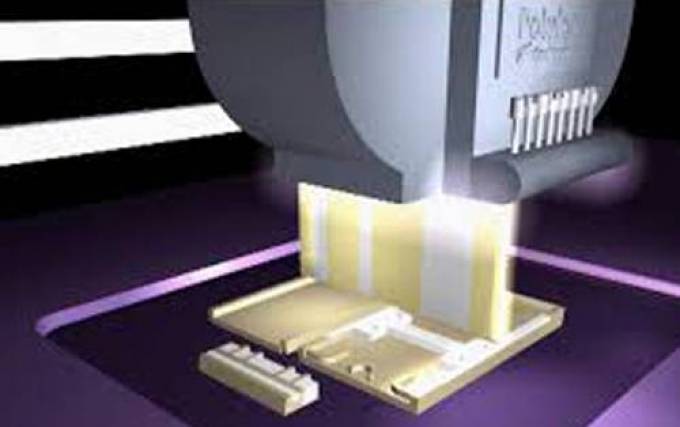
Custom machining manufacturing plays a crucial role in bringing concepts to life by creating unique and precise components. Whether for automotive, aerospace, or any other industry, Custom Machining Big Part Small Batch offers flexibility, accuracy, and cost-effectiveness.
Ahead in this blog, we'll delve into the world of Custom Machining manufacturing, understanding its processes, techniques, and the journey from concept to creation.
Understanding Custom Machining Manufacturing
Custom machining manufacturing is the process of transforming concepts into tangible products through various machining techniques. These techniques include CNC milling, turning, and grinding, which enable the production of precise and intricate components.
The advantages of custom machining manufacturing are numerous:
Flexibility in Design Iterations
High Accuracy and Repeatability
CNC Machining Can Produce Complex Geometries
Cost-effectiveness for Both Prototyping and Production
The Journey from Concept to Design
Embarking on the journey from concept to design in custom machining manufacturing is an exciting process that involves meticulous planning and collaboration.
1. It all begins with the initial stage of concept development, where ideas are born, and visions take shape. Engineers, designers, and clients brainstorm and refine the design, aligning it with the desired specifications and requirements.
2. Effective communication and collaboration play a pivotal role during this crucial phase. Engineers and designers work closely with clients to understand their vision, goals, and functional requirements.
3. They gather valuable insights, identify potential challenges, and propose innovative design optimization solutions. This collaborative approach fosters a dynamic exchange of ideas and sets the foundation for a successful custom machining project.
4. The next step is translating the concept into a tangible design. This is where computer-aided design, or CAD software, comes into play.
5. CAD software enables the creation of detailed 3D models that serve as a digital blueprint for the subsequent manufacturing stages. Designers meticulously craft these models, ensuring accuracy, functionality, and manufacturability.
6. The beauty of CAD lies in its ability to provide a comprehensive visual representation of the design. Engineers and designers can explore the intricacies of the concept from various angles, make precise measurements, and conduct virtual simulations to test its performance. This digital prototyping helps identify potential design flaws, allowing for timely modifications and improvements before manufacturing begins.
7. Moreover, CAD software facilitates seamless collaboration among different stakeholders involved in the project. Design files can be easily shared and reviewed, enabling effective feedback and iterative design cycles. This iterative approach ensures that the final design captures the essence of the initial concept while addressing any practical limitations or optimization opportunities.
So basically, the journey from concept to design in custom machining manufacturing is an iterative and collaborative process. It involves effective communication, meticulous planning, and the utilization of advanced CAD software. This transformative journey sets the stage for the subsequent manufacturing stages and ensures that the final product meets the desired requirements and exceeds expectations.
Material Selection and Preparation
Material selection is a critical aspect of custom machining manufacturing. Different materials offer varying properties and characteristics suitable for specific applications.
Factors like strength, durability, corrosion resistance, and thermal properties must be considered when choosing the material. Material preparation involves cutting, shaping, and pre-treatment processes like cleaning and stress relieving to ensure optimal machinability and dimensional accuracy.
Precision Machining Techniques
Precision machining techniques form the backbone of custom machining manufacturing. CNC machining, driven by computer numerical control, enables high precision and repeatability by controlling the movements of the machining tools.
CNC milling, turning, and grinding are commonly employed techniques, each with its own advantages and applications. CNC milling is ideal for complex geometries while turning is suitable for cylindrical parts. Grinding ensures fine surface finishes and tight tolerances for critical components.
Quality Control and Inspection
Maintaining quality control throughout the Custom Machining Big Part Small Batch process is paramount. Advanced inspection tools and techniques are employed to ensure dimensional accuracy and adherence to specifications.
Coordinate measuring machines (CMMs), optical inspection systems, and other precision measurement tools enable thorough inspections. Manufacturers may also follow quality certifications and standards like ISO 9001 to ensure consistent quality and customer satisfaction.
Post-machining Processes and Finishing
Post-machining processes are crucial to enhance the aesthetics and functionality of the final product. Careful consideration of the desired surface finish, durability, and environmental factors helps choose the appropriate finishing techniques.
These processes include deburring to remove sharp edges, polishing to achieve smooth surfaces, and surface treatments like anodizing, plating, painting, or powder coating for corrosion resistance, improved appearance, or specialized properties.
Conclusion
Custom machining manufacturing is a fascinating process that allows concepts to evolve into tangible products. From concept development to precision machining, material selection, quality control, and post-machining processes, each step is vital.
By exploring the possibilities offered by custom machining manufacturing, businesses can benefit from its flexibility, accuracy, and cost-effectiveness. Whether for prototyping or large-scale production, Custom Machining Big Part Small Batch offers a solution for turning ideas into reality.
Embrace the power of custom machining and witness the transformation from concept to creation with China Casting Orlando.


