Design Parameters That Affect Leaf Spring Durability
Published By Sonico Leafspring, 6 Jan 2026
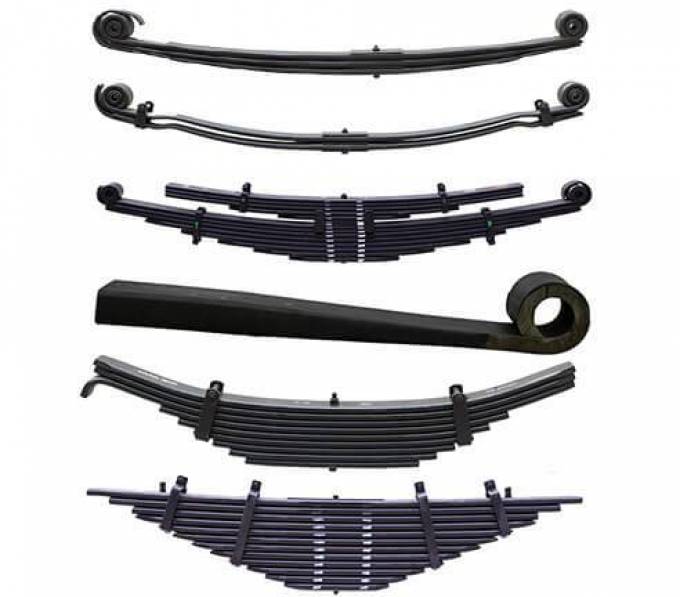
Leaf springs remain one of the most reliable and widely used suspension components in commercial vehicles, trailers, buses, and off-highway equipment. Their durability directly influences vehicle safety, payload capacity, ride stability, and overall operating costs. While operating conditions and maintenance play a role, leaf spring durability is primarily determined at the design stage. Subtle choices in geometry, material selection, stress distribution, and manufacturing processes can significantly impact service life.
This article explores the key design parameters that affect leaf spring durability, explaining how engineering decisions translate into real-world performance and longevity.
Material Selection and Metallurgical Properties
Steel Grade and Composition
Most conventional leaf springs are manufactured from high-carbon or alloy spring steels such as EN45, 51CrV4, SUP9, or SUP11. The choice of steel grade affects:
- Tensile strength
- Fatigue resistance
- Toughness under shock loads
- Resistance to crack propagation
Higher alloy content (chromium, vanadium, silicon) improves fatigue life and load-bearing capacity but increases cost and manufacturing complexity. A balance must be struck between strength and ductility to prevent brittle failure.
Grain Structure and Purity
Inclusions, segregation, or inconsistent grain size reduce fatigue strength. Clean steel with controlled grain refinement improves resistance to microcrack initiation—one of the primary causes of leaf spring failure.
Durability takeaway: Superior metallurgy delays fatigue failure and enhances long-term load endurance.
Leaf Geometry and Dimensional Design
Leaf Thickness
Leaf thickness directly influences stiffness and stress levels:
- Thicker leaves increase load capacity but concentrate stress
- Thinner leaves improve flexibility but may reduce fatigue life if overstressed
An optimized thickness profile ensures that stress remains below the endurance limit throughout the working range.
Leaf Width
Increasing leaf width distributes load over a larger area, reducing bending stress. However, excessive width can:
- Increase weight
- Reduce flexibility
- Create packaging constraints in compact suspensions
Length and Effective Span
Longer leaf springs experience lower bending stress for the same load compared to shorter springs. The effective span between mounting points strongly influences durability, especially in heavy commercial vehicles.
Durability takeaway: Proper dimensional optimization reduces peak stress and improves fatigue resistance.
Number of Leaves and Stack Configuration
Multi-Leaf vs Mono-Leaf Design
- Multi-leaf springs distribute load across multiple leaves, improving redundancy and durability
- Mono-leaf springs reduce weight but require advanced materials and precise stress control
Load Sharing Between Leaves
Uniform load distribution across the leaf stack is essential. Poorly designed stacks cause:
- Overstressing of master leaves
- Uneven wear
- Premature fatigue cracks
Use of graduated leaf lengths and tapered profiles improves load sharing and reduces inter-leaf stress.
Inter-Leaf Friction
While some friction helps damp vibrations, excessive friction increases wear and heat generation. Designers must carefully manage contact pressure between leaves.
Stress Distribution and Spring Rate Design
Uniform Stress Principle
Durable leaf springs are designed to maintain near-uniform stress along the length of the leaf. Stress concentrations near:
- Center bolts
- Spring eyes
- Load contact points
are common failure initiation zones.
Progressive vs Linear Spring Rate
- Linear springs maintain consistent stiffness but may experience higher peak stress
- Progressive springs gradually increase stiffness with load, reducing shock loading and fatigue
Progressive designs are especially beneficial in vehicles operating under variable payload conditions.
Heat Treatment and Residual Stress Control
Quenching and Tempering
Heat treatment determines final mechanical properties:
- Quenching provides hardness and strength
- Tempering restores ductility and toughness
Improper heat treatment can cause brittleness or insufficient fatigue strength.
Shot Peening
Shot peening introduces compressive residual stress on the surface, significantly improving fatigue life by:
- Delaying crack initiation
- Slowing crack propagation
This process is considered essential for high-durability leaf springs in commercial applications.
Eye Design and End Geometry
Spring Eye Configuration
Spring eyes are high-stress zones due to:
- Bending
- Torsion
- Mounting constraints
Poorly designed eyes can crack prematurely, even if the rest of the spring is sound.
Eye Rolling and Bush Fitment
Precision eye rolling ensures:
- Uniform material flow
- Reduced stress risers
- Proper bushing alignment
Incorrect bushing selection or poor fitment transfers abnormal stress to the leaf.
Surface Finish and Edge Quality
Edge Trimming and Chamfering
Sharp edges act as stress concentrators. Chamfered and rounded edges reduce the likelihood of crack initiation.
Surface Roughness
Scratches, tool marks, or surface defects drastically reduce fatigue life. Controlled finishing processes improve durability without increasing weight.
Corrosion Protection and Environmental Design
Protective Coatings
Corrosion weakens material and accelerates fatigue cracking. Common protective methods include:
- Phosphate coating
- Paint or powder coating
- Anti-corrosion oils or waxes
Environmental Exposure Consideration
Designs must account for:
- Humidity
- Road salts
- Industrial chemicals
- Temperature fluctuations
Corrosion pits act as crack initiation points, drastically reducing service life.
Compatibility with Suspension Hardware
Leaf spring durability depends on system-level compatibility:
- U-bolt torque accuracy
- Shackle geometry
- Axle seat alignment
- Bushing material selection
Even a well-designed spring can fail prematurely if integrated incorrectly into the suspension system.
Load Rating and Safety Factors
Designing leaf springs with adequate safety margins is essential. Underestimating:
- Maximum payload
- Dynamic shock loads
- Overloading tendencies
leads to rapid fatigue damage.
Engineering safety factors must reflect real-world operating conditions, not just nominal ratings.
Durability takeaway: Conservative design assumptions reduce unexpected failures.
Leaf spring durability is the result of multiple interdependent design parameters, not a single factor. Material quality, geometry, stress distribution, heat treatment, surface finish, and system integration all play vital roles in determining how long a leaf spring will perform reliably.
Well-engineered leaf springs:
- Resist fatigue under cyclic loads
- Withstand harsh environments
- Maintain consistent ride and load performance
- Reduce downtime and lifecycle costs
For manufacturers, OEMs, and fleet operators, investing in sound leaf spring design is not just about strength—it is about long-term reliability, safety, and value.


